



国产精品99一区二区三_免费中文日韩_国产在线精品一区二区_日本成人手机在线

 Home Page | Photos | Video | Forum | Most Popular | Special Reports | Biz China Weekly
Make Us Your Home Page
Most Searched: AIIB  RMB  Australia Open  Zika   Iran   

Memories of War

China Armed Forces   2015-10-20 17:31:04

????Seventy years have passed. Even the youngest ex-soldiers are gray and weak, unable to see and speak clearly. But, asked about the battles they fought, their minds are focused and spirits fired. They tell their stories, hoping younger generations will not forget the bloody history of the Chinese nation.

????Courageous scout

????Liu Wanfu, 92, occasionally tells his son of his past as a soldier. His comrades-in-arms had called him “Blind Liu” after he lost his sight temporarily, and was successfully treated when he was just a new recruit.

????Liu, a leading scout in his regiment, had joined the army in 1941 and left in 1949. He said he killed his first Japanese soldier in 1942 when more than 60 Japanese troops threatened to overrun the regiment headquarters.

????“At the time, each of us only had eight bullets and we did not load our guns. But a Japanese soldier was coming at me with a bayonet. Terrified, I loaded my gun immediately and shot him.”

????Liu and four other scouts were sleeping one night, when he awoke to find Japanese troops had seized their guns and were tying them up. He thought the Japanese might have mistaken him as one of the two civilians in their team and ordered him to tie up the others. Liu seized the opportunity and ran. But he suddenly thought of his gun: “A precious gun was life itself.” Liu wanted to steal one from a nearby Japanese sentry post, but when he saw there were four sentries, he decided to run again.

????When he was out of danger, he began to curse the enemy. But then he realized that they would quickly notice one man was missing. He ran again in the dark for a good three hours before he arrived at the regiment headquarters. His commander said: “Thanks to your report our regiment has been saved.”

????He had lost a gun, but Liu was commended rather than punished. “I outran the Japanese and gained the initiative in the battle for my regiment. But my lungs were injured in the run and I have coughed very badly ever since. If not for that, I would have stayed in the army longer.”

????On retirement, Liu was rewarded with a horse -- his troop had only three horses at the time – to help with farm work back home. Liu worked hard and lived simply, telling his war stories to those who will listen.

????“The spirit of struggle and sacrifice should be remembered by our descendants,” he says.

????No hero – just a survivor

????Ning Xizhen, 94, was a 20-year-old soldier in the Chinese expeditionary forces fighting Japanese aggression in India and Myanmar.

????“I am no hero – just a survivor of the war,” says the veteran who was present when Chinese forces accepted the Japanese surrender both in central Hunan’s Zhijiang Township and in Nanjing.

????Ning’s memory is dotted with turning points.

????In 1940, the Japanese occupied Ning’s hometown in north China’s Shanxi Province. The young patriot enrolled at the Huangpu Military Academy in Chengdu. On graduation in 1943, he and 18 classmates prepared to join the guerrilla war in enemy-occupied areas. However, he was eventually deployed to the expeditionary forces and flew over the “Hump” to India and became an intelligence officer.

????The hardships of war exceeded his wildest imagination. “Our equipment was so inferior to the enemy’s,” he recalls. Ning had to break through a Japanese blockade in northern Myanmar and take a battlefield map to his commanders by himself at the end of 1943. It took him a whole day from morning to dawn the next day to cross several kilometers of jungle under intense fire. But he succeeded and helped to thwart enemy reinforcements.

????During the battles that followed, Ning was promoted to platoon leader. In the last battle he fought in Myanmar, Ning and his comrades were ambushed when they were on a boat on a river. Several of them drowned after being injured.

????“Bullets were flying and soldiers went down one by one.” Ning ordered the others to abandon the boat. They used flags to signal the artillery on the bank to cover them as they swam for land. More than a dozen soldiers were killed in the battle and Ning suffered minor injuries. “You could keenly feel the ruthlessness of war at that time.”

????Ning still recalls his happiness at the news of Japan’s unconditional surrender in August 1945. “Everyone sang and danced. The feeling could not be possibly expressed in words.” His troop participated in security missions at the surrender ceremonies in Zhijiang and Nanjing, witnessing the most honorable moments of victory.

????War left a profound impression on Ning. Stooped and barely able to hear, he has a big voice and a clear mind. He always wears his medals when visitors come. He repeats: “I am no hero – just a survivor of the war. Today’s peace cost the lives of countless soldiers, who were real heroes. I hope there is no more war.”

????The “savage mountains”

????Liu Guiying, 95, sits in her narrow old house in east China’s Anhui Province, watching the constant rain through the window.

????She remembers the rain 73 year ago. As a nurse in the expeditionary forces, the 22-year-old from Hunan Province was moving through the jungle in northern Myanmar. Rain fell loudly on the tree leaves.

????She was soaked through despite an oilskin cloak. “The rain was like someone above pouring water directly on the earth. Creeks quickly became rivers. We were desperate.”

????Liu hated the rain. She clearly recalls the details of the retreat through the “savage mountains”: the long, unbroken chain of mountains, with ancient trees like huge umbrellas, and a rainy season that seemed never to end.

????At the end of April 1942, allied forces of China and Britain were on the retreat. Liu and her troop had to fall back by way of the mountains. She managed to get to India -- one of the very few women to survive.

????“It was tragic. Bodies were everywhere, so were maggots. Of the five nurse sisters, I was the only survivor,” she says.

????She still remembers the names of her comrades. “They died too young.”

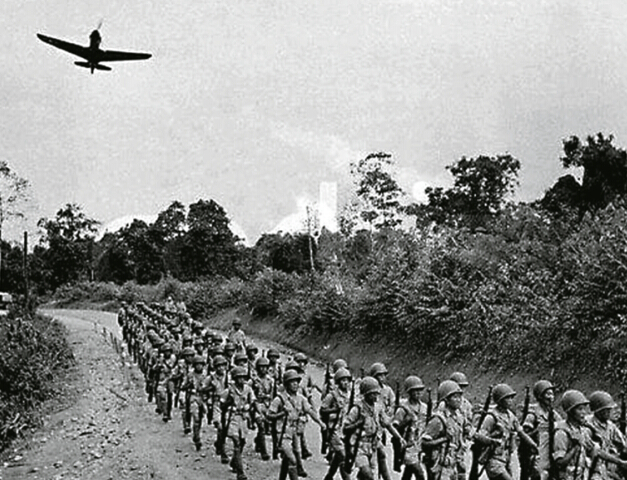
????Liu recalls the troops entered Myanmar on March 12, 1942. U.S. aircraft covered them in the air. Tanks, gun carriers, artillery caissons and infantry trucks moved in a long line. Local people played gongs and drums, and gave them flowers and wine along the way.

????It was the first time Chinese troops had fought in a foreign land since their defeat in the first Sino-Japanese War of 1894-1895. Soldiers held their heads high and sang a battle song on the way: “Guns are on our shoulders, blood is in out chest. Let’s go to Myanmar, go to the international battlefield.”

????Liu’s memories are painful. She has dreamed of the war on countless nights: bandaging the injured; the soldiers who burned themselves to death to avoid capture; the poisonous insects and snakes, and the wild animals that killed her comrades; as well as the hunger, malaria and the enemy – all of these in the dense jungle and heavy rain.

????Liu was too shaken to talk about those memories for a long time. Her children only heard them in recent years. She collected half a bookcase of materials on the expeditionary forces. She used to sit in the porch and weep. But she never regretted joining the army. “When a war comes, it is everyone’s responsibility to fight. I was only doing my duty.”

????Liu remembered the last words of her head nurse, Hu Shan: “We died for our country; we sacrificed our youth and lives. If you return, you must tell our stories.”

????In 2005, the Central Military Commission awarded her a gold medal on the 60th anniversary of victory in the war.

Editor: 楊茹
Related News
           
Photos  >>
Video  >>
  Special Reports  >>
Xinhuanet

Memories of War

China Armed Forces 2015-10-20 17:31:04
[Editor: 楊茹]

????Seventy years have passed. Even the youngest ex-soldiers are gray and weak, unable to see and speak clearly. But, asked about the battles they fought, their minds are focused and spirits fired. They tell their stories, hoping younger generations will not forget the bloody history of the Chinese nation.

????Courageous scout

????Liu Wanfu, 92, occasionally tells his son of his past as a soldier. His comrades-in-arms had called him “Blind Liu” after he lost his sight temporarily, and was successfully treated when he was just a new recruit.

????Liu, a leading scout in his regiment, had joined the army in 1941 and left in 1949. He said he killed his first Japanese soldier in 1942 when more than 60 Japanese troops threatened to overrun the regiment headquarters.

????“At the time, each of us only had eight bullets and we did not load our guns. But a Japanese soldier was coming at me with a bayonet. Terrified, I loaded my gun immediately and shot him.”

????Liu and four other scouts were sleeping one night, when he awoke to find Japanese troops had seized their guns and were tying them up. He thought the Japanese might have mistaken him as one of the two civilians in their team and ordered him to tie up the others. Liu seized the opportunity and ran. But he suddenly thought of his gun: “A precious gun was life itself.” Liu wanted to steal one from a nearby Japanese sentry post, but when he saw there were four sentries, he decided to run again.

????When he was out of danger, he began to curse the enemy. But then he realized that they would quickly notice one man was missing. He ran again in the dark for a good three hours before he arrived at the regiment headquarters. His commander said: “Thanks to your report our regiment has been saved.”

????He had lost a gun, but Liu was commended rather than punished. “I outran the Japanese and gained the initiative in the battle for my regiment. But my lungs were injured in the run and I have coughed very badly ever since. If not for that, I would have stayed in the army longer.”

????On retirement, Liu was rewarded with a horse -- his troop had only three horses at the time – to help with farm work back home. Liu worked hard and lived simply, telling his war stories to those who will listen.

????“The spirit of struggle and sacrifice should be remembered by our descendants,” he says.

????No hero – just a survivor

????Ning Xizhen, 94, was a 20-year-old soldier in the Chinese expeditionary forces fighting Japanese aggression in India and Myanmar.

????“I am no hero – just a survivor of the war,” says the veteran who was present when Chinese forces accepted the Japanese surrender both in central Hunan’s Zhijiang Township and in Nanjing.

????Ning’s memory is dotted with turning points.

????In 1940, the Japanese occupied Ning’s hometown in north China’s Shanxi Province. The young patriot enrolled at the Huangpu Military Academy in Chengdu. On graduation in 1943, he and 18 classmates prepared to join the guerrilla war in enemy-occupied areas. However, he was eventually deployed to the expeditionary forces and flew over the “Hump” to India and became an intelligence officer.

????The hardships of war exceeded his wildest imagination. “Our equipment was so inferior to the enemy’s,” he recalls. Ning had to break through a Japanese blockade in northern Myanmar and take a battlefield map to his commanders by himself at the end of 1943. It took him a whole day from morning to dawn the next day to cross several kilometers of jungle under intense fire. But he succeeded and helped to thwart enemy reinforcements.

????During the battles that followed, Ning was promoted to platoon leader. In the last battle he fought in Myanmar, Ning and his comrades were ambushed when they were on a boat on a river. Several of them drowned after being injured.

????“Bullets were flying and soldiers went down one by one.” Ning ordered the others to abandon the boat. They used flags to signal the artillery on the bank to cover them as they swam for land. More than a dozen soldiers were killed in the battle and Ning suffered minor injuries. “You could keenly feel the ruthlessness of war at that time.”

????Ning still recalls his happiness at the news of Japan’s unconditional surrender in August 1945. “Everyone sang and danced. The feeling could not be possibly expressed in words.” His troop participated in security missions at the surrender ceremonies in Zhijiang and Nanjing, witnessing the most honorable moments of victory.

????War left a profound impression on Ning. Stooped and barely able to hear, he has a big voice and a clear mind. He always wears his medals when visitors come. He repeats: “I am no hero – just a survivor of the war. Today’s peace cost the lives of countless soldiers, who were real heroes. I hope there is no more war.”

????The “savage mountains”

????Liu Guiying, 95, sits in her narrow old house in east China’s Anhui Province, watching the constant rain through the window.

????She remembers the rain 73 year ago. As a nurse in the expeditionary forces, the 22-year-old from Hunan Province was moving through the jungle in northern Myanmar. Rain fell loudly on the tree leaves.

????She was soaked through despite an oilskin cloak. “The rain was like someone above pouring water directly on the earth. Creeks quickly became rivers. We were desperate.”

????Liu hated the rain. She clearly recalls the details of the retreat through the “savage mountains”: the long, unbroken chain of mountains, with ancient trees like huge umbrellas, and a rainy season that seemed never to end.

????At the end of April 1942, allied forces of China and Britain were on the retreat. Liu and her troop had to fall back by way of the mountains. She managed to get to India -- one of the very few women to survive.

????“It was tragic. Bodies were everywhere, so were maggots. Of the five nurse sisters, I was the only survivor,” she says.

????She still remembers the names of her comrades. “They died too young.”

????Liu recalls the troops entered Myanmar on March 12, 1942. U.S. aircraft covered them in the air. Tanks, gun carriers, artillery caissons and infantry trucks moved in a long line. Local people played gongs and drums, and gave them flowers and wine along the way.

????It was the first time Chinese troops had fought in a foreign land since their defeat in the first Sino-Japanese War of 1894-1895. Soldiers held their heads high and sang a battle song on the way: “Guns are on our shoulders, blood is in out chest. Let’s go to Myanmar, go to the international battlefield.”

????Liu’s memories are painful. She has dreamed of the war on countless nights: bandaging the injured; the soldiers who burned themselves to death to avoid capture; the poisonous insects and snakes, and the wild animals that killed her comrades; as well as the hunger, malaria and the enemy – all of these in the dense jungle and heavy rain.

????Liu was too shaken to talk about those memories for a long time. Her children only heard them in recent years. She collected half a bookcase of materials on the expeditionary forces. She used to sit in the porch and weep. But she never regretted joining the army. “When a war comes, it is everyone’s responsibility to fight. I was only doing my duty.”

????Liu remembered the last words of her head nurse, Hu Shan: “We died for our country; we sacrificed our youth and lives. If you return, you must tell our stories.”

????In 2005, the Central Military Commission awarded her a gold medal on the 60th anniversary of victory in the war.

[Editor: 楊茹]
010020030330000000000000011100291283391891
国产精品99一区二区三_免费中文日韩_国产在线精品一区二区_日本成人手机在线
中文网丁香综合网| 亚洲国产精品一区制服丝袜| 欧美日韩视频| 欧美网站在线观看| 国产日韩欧美在线视频观看| 黄色一区二区三区| 亚洲精品影院| 亚洲欧美成人一区二区三区| 久久精品国产亚洲aⅴ| 久热精品视频在线观看| 欧美美女bb生活片| 国产精品久久久久久影院8一贰佰| 国产嫩草影院久久久久| 亚洲国产精品va在线观看黑人 | 99热精品在线观看| 午夜精品福利在线观看| 美女脱光内衣内裤视频久久网站| 欧美日韩精品系列| 国产午夜久久| 亚洲精品在线看| 午夜精品久久久久| 免费国产自线拍一欧美视频| 欧美日韩综合一区| 一区二区三区在线视频免费观看| 一本色道久久88精品综合| 久久精品国产免费看久久精品| 欧美日本免费| 国产在线日韩| 亚洲视频在线观看| 免费黄网站欧美| 国产免费成人av| 亚洲日本aⅴ片在线观看香蕉| 欧美一区二区精品久久911| 欧美精品成人一区二区在线观看| 国产一区二区三区四区老人| 一区二区日韩免费看| 久久嫩草精品久久久精品一| 欧美日韩在线播放| 亚洲激情偷拍| 欧美在线综合| 国产精品高潮呻吟久久av无限| 亚洲第一精品夜夜躁人人爽| 欧美一区二区网站| 欧美日韩一区二区精品| 久久国产主播精品| 国产日韩欧美亚洲| 亚洲区一区二区三区| 久久国产精品亚洲77777| 欧美午夜视频一区二区| 亚洲国产精品一区制服丝袜| 久久av最新网址| 国产精品videossex久久发布| 亚洲日本欧美在线| 久久一二三区| 国产一区二区三区久久久久久久久| 国产精品99久久99久久久二8| 欧美大片在线观看一区| 在线播放精品| 久久精品免费电影| 国产日韩欧美91| 亚洲免费中文| 欧美色大人视频| av不卡在线观看| 欧美精品一卡| 亚洲三级性片| 六月天综合网| 在线高清一区| 久久频这里精品99香蕉| 国产在线播精品第三| 午夜精品久久久久久| 国产精品美女久久| 亚洲一区精品视频| 国产精品v亚洲精品v日韩精品| 99精品国产在热久久| 欧美巨乳在线| 亚洲最黄网站| 欧美日韩亚洲综合| 宅男噜噜噜66一区二区| 国产精品草莓在线免费观看| 亚洲午夜激情| 国产精品少妇自拍| 欧美一级电影久久| 国产午夜亚洲精品不卡| 欧美亚洲综合在线| 国产日本欧洲亚洲| 欧美与欧洲交xxxx免费观看| 国产一区二区高清| 久久精彩免费视频| 韩国三级电影久久久久久| 久久久久女教师免费一区| 在线观看欧美成人| 欧美高清视频一区二区| 日韩一级二级三级| 欧美午夜宅男影院| 午夜精品国产更新| 国产亚洲一级| 美女主播视频一区| 亚洲免费激情| 国产精品国产三级国产普通话99| 亚洲欧美日韩国产综合| 国产亚洲欧美一区二区三区| 久久精品一本| 亚洲人成人77777线观看| 欧美日韩岛国| 午夜精品短视频| 精品动漫3d一区二区三区免费| 美女主播视频一区| 一本大道久久a久久精品综合 | 国产精品豆花视频| 性欧美暴力猛交另类hd| 激情成人亚洲| 欧美激情亚洲激情| 亚洲夜晚福利在线观看| 国产一区二区日韩精品欧美精品| 久久中文字幕一区二区三区| 亚洲精品国产精品国自产在线| 欧美午夜免费影院| 久久激情五月婷婷| 亚洲人体1000| 国产乱码精品1区2区3区| 久久综合国产精品| 一区二区三区欧美在线| 国产午夜精品美女视频明星a级| 欧美激情一区二区三级高清视频| 国产日本欧美一区二区| 老司机精品视频一区二区三区| 亚洲精品一二三区| 国产精品美女久久久免费| 久久久久久久999精品视频| 亚洲精品国产精品久久清纯直播| 国产精品久久久| 久久久久一区二区三区| 99精品福利视频| 国产日韩欧美a| 欧美激情视频一区二区三区不卡| 亚洲欧美日韩国产成人精品影院| 一区二区三区亚洲| 欧美日韩亚洲综合| 久久久久久香蕉网| 宅男噜噜噜66国产日韩在线观看| 国内精品久久久| 欧美日韩三区| 久久午夜电影| 亚洲男女毛片无遮挡| 亚洲国产精品www| 国产免费亚洲高清| 欧美日本不卡| 久久亚洲春色中文字幕久久久| 亚洲午夜电影| 亚洲片在线观看| 狠狠网亚洲精品| 国产精品久久久久毛片大屁完整版 | 国产欧美日韩精品丝袜高跟鞋| 欧美a级片网| 欧美一区二区三区在线看| 亚洲伦理在线观看| 狠久久av成人天堂| 国产精品日日摸夜夜添夜夜av | 国产麻豆综合| 欧美日韩网址| 欧美国产第一页| 久久久蜜桃一区二区人| 亚洲欧美激情精品一区二区| 亚洲精品专区| 在线观看成人一级片| 国产毛片一区二区| 欧美视频在线观看 亚洲欧| 欧美成人精品1314www| 久久爱另类一区二区小说| 亚洲一区在线免费| 宅男精品视频| 亚洲伦理在线观看| 91久久精品网| 亚洲电影专区| 激情文学一区| 国产又爽又黄的激情精品视频| 国产精品视频在线观看| 欧美性一二三区| 欧美日韩亚洲免费| 欧美连裤袜在线视频| 欧美二区在线看| 欧美sm视频| 麻豆精品视频| 久久亚洲综合色一区二区三区| 欧美一区二区精品| 性亚洲最疯狂xxxx高清| 亚洲欧美成人精品| 亚洲一区二区少妇| 亚洲伊人网站| 午夜激情久久久| 亚洲欧美资源在线| 亚洲欧美日韩中文在线制服| 亚洲在线视频一区| 亚洲欧美日韩综合aⅴ视频| 亚洲综合日韩在线| 午夜精品成人在线| 小黄鸭精品密入口导航| 午夜视频一区二区| 欧美一区二区三区在线视频 | 亚洲开发第一视频在线播放| 日韩一二三区视频| 亚洲卡通欧美制服中文| 亚洲精品日韩一| 日韩一级不卡|